Small offices don’t need a massive mailroom machine to save time. The right paper folder can speed up handouts, invoices, newsletters, and everyday admin work without taking over your desk.
This roundup focuses on practical paper folding machines for small offices, with options that balance speed, footprint, fold types, and ease of use.
Best 10 Paper Folding Machines for Small Offices Picks for 2026
Office-Ready Automatic Folder
Martin Yale P7500 Paper Folding Machine

- Up to 4,000 sheets per hour
- Letter, half, Z-fold, and double parallel folds
- Easy tabletop use for small offices
Best For: Small offices and mailrooms needing simple automatic folding
High-Speed Desktop Folder
Formax FD 300 Desktop Document Folder

- Up to 7,400 sheets per hour
- Drop-in top feed for up to 200 sheets
- LCD counter with AutoBatch control
Best For: Busy offices that need fast, organized folding
Booklet Folding and Binding Station

- Folds and binds in one machine
- Produces about 200-300 booklets per hour
- Supports paper up to 11.69 x 16.54 inches
Best For: Offices and schools making folded, bound booklets
Compact High-Volume Folder
Formax FD 300 Desktop Document Folder (Black)

- Same 7,400-sheet-per-hour speed
- Drop-in feed with neat output conveyor
- Black finish for office-friendly styling
Best For: Small offices wanting the FD 300 in black
Multifunction Booklet Maker
A3 Booklet Folding Binding Machine

- Folds and staples in one workflow
- Handles booklet sizes up to A3-related formats
- Built with precision markings and safety fuse
Best For: Small offices that make folded, stapled booklets
Desktop Letter Folder

- Automatic letter or half-fold operation
- Folds 1-3 sheets, including stapled sets
- Rated up to 1,800 sheets per hour
Best For: Small offices folding standard letter-size documents
Speed-Control Desktop Folder
TECHTONGDA Automatic Paper Folding Machine
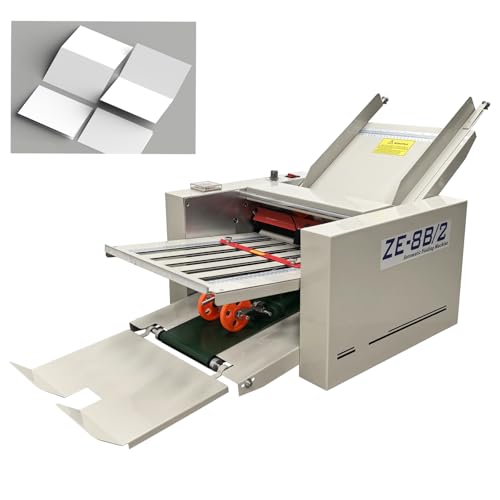
- Adjustable speed with electronic fold counting
- Wide paper-size range from 2 x 3 to 12 x 27 inches
- Dual trays and indentation wheels for cleaner folds
Best For: Offices needing flexible, higher-volume folding control
Compact Desktop Auto Folder
P6500 Manual-Feed Letter/Half-Fold Machine

- Letter or half-fold output for 8.5" x 11" paper
- Hand-feeds 1-3 sheets and accepts stapled sets
- Up to 1,800 sheets per hour for routine office use
Best For: Small offices needing a compact folder for everyday document prep
High-Capacity Auto Folder
Martin Yale 1217A Medium-Duty Document Folder
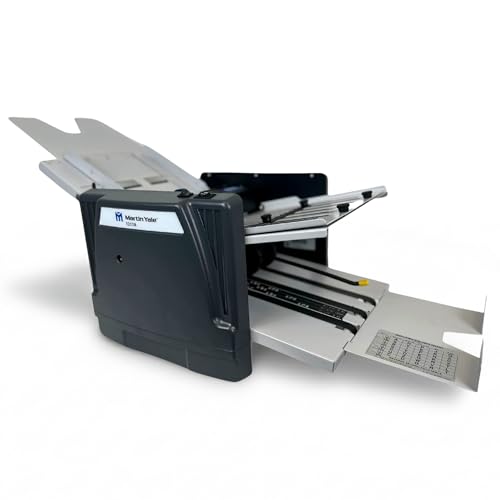
- Seven fold types with adjustable fold tables
- Automatic feeding, folding, and collecting for larger jobs
- Up to 10,300 sheets per hour with 250-sheet capacity
Best For: Offices that need higher-capacity automatic folding
Desktop Manual-Feed Folder
Martin Yale P6500 Tri-Fold and Half-Fold

- Manual feed with automatic folding
- Tri-fold and half-fold support for letter-size paper
- Compact desktop design for small work areas
Best For: Small offices needing a compact folder for standard letter-size documents
Office-Ready Automatic Folder – Martin Yale P7500 Paper Folding Machine
If you need paper folding machines for small offices that can keep up with regular mailings, the Martin Yale P7500 is built for straightforward, high-volume folding. It accepts letter- and legal-size documents and offers multiple common fold styles, making it a practical fit for everyday office tasks without a complicated setup.
Best For: Small offices, mailrooms, churches, and shared workspaces that want simple automatic folding.
Pros:
- Folds up to 4,000 sheets per hour for steady office production
- Handles letter, half, Z-fold, and double parallel folds
- Top feed tray holds up to 50 sheets, with a stacking tray for finished output
- Simple operation makes it easy for different staff members to use
Cons:
- Limited to 8.5″ x 11″ and 8.5″ x 14″ 20lb bond paper per the supplied details
- Not aimed at heavy-duty document finishing beyond standard folding jobs
This model is a solid choice if your office wants reliable folding with minimal training and a compact tabletop footprint. It focuses on ease of use and everyday productivity rather than advanced finishing features.
High-Speed Desktop Folder – Formax FD 300 Desktop Document Folder
Among paper folding machines for small offices, the Formax FD 300 stands out when speed and organized output matter most. It uses a drop-in top-feed design, supports multiple standard fold types, and includes controls that make batch folding easier to manage during repetitive office runs.
Best For: Offices that process frequent folding jobs and want fast, organized output.
Pros:
- Folds up to 7,400 sheets per hour for high-volume work
- No paper fanning required; load up to 200 sheets of 20# paper
- LCD control panel with 3-digit counter and AutoBatch function
- Output conveyor helps keep folded documents stacked neatly
Cons:
- Heavier and larger than a basic desktop folder at 40 pounds
- Designed for paper up to 8.5″ x 14″, so it is not a general-purpose large-format solution
If your office needs a faster folder with more control over batch work, this model offers a practical mix of speed and workflow features. It is a stronger fit for offices that value efficiency and tidy document handling.
Booklet Folding and Binding Station – mouhtfao A3 Booklet Maker
If your search for paper folding machines for small offices includes booklet-making tasks, this two-in-one unit offers a different approach. It can fold and bind separately or together, which makes it useful for offices that need simple booklet finishing rather than standard letter folding alone.
Best For: Schools and offices that need fold-and-bind booklet production.
Pros:
- Two-in-one design folds and binds, either separately or at the same time
- Handles approximately 200-300 booklets per hour, depending on operator skill
- Supports a range of paper sizes up to 11.69 x 16.54 inches
- Built-in safety features include a fuse-protected circuit and automatic stopper return
Cons:
- More specialized than a standard office paper folder
- Folding and binding capacity is limited compared with dedicated high-volume folders
This is a niche pick for teams that want booklet output rather than simple fold-only performance. It makes the most sense when folding and binding need to happen in one workflow.
Compact High-Volume Folder – Formax FD 300 Desktop Document Folder (Black)
For paper folding machines for small offices that need the same performance in a different finish, this black Formax FD 300 version delivers the same core workflow features. It is aimed at fast desktop folding with a drop-in feed, multiple fold types, and a conveyor-style output path that helps keep stacks orderly.
Best For: Small offices that want a high-speed desktop folder in black.
Pros:
- Up to 7,400 folded sheets per hour
- Drop-in top-feed system holds up to 200 sheets of 20# paper
- LCD control panel includes a 3-digit counter and AutoBatch function
- Output conveyor supports neat, sequential stacking
Cons:
- Same 8.5″ x 14″ paper limit as the other FD 300 variant
- At nearly 40 pounds, it is not the lightest desktop option
This version makes sense if the black finish better matches your workspace while you still want fast, organized folding. It remains a strong fit for offices that process recurring mailings and want a dependable desktop machine.
Multifunction Booklet Maker – A3 Booklet Folding Binding Machine
If you need paper folding machines for small offices that can also handle binding, this A3 booklet maker is a practical 2-in-1 option. It is built for folding and stapling in one workflow, which can save time when you are producing booklets, manuals, or office handouts.
Best For: Small offices, print shops, and schools that want one machine for both folding and stapling booklet jobs.
Pros:
- Combines folding and stapling, or can be used for either task separately.
- Handles up to about 200-300 booklets per hour depending on operator skill.
- Supports paper sizes from 5.83 x 8.27 inches to 11.69 x 16.54 inches.
- Includes safety and precision features like a power switch fuse and millimeter-level markings.
Cons:
- Designed more for booklet production than simple desktop letter folding.
- Best output depends on operator proficiency.
- Large footprint and heavier-duty design may be more than some tiny offices need.
This is a strong fit if your office regularly makes folded, stapled documents and needs a machine that prioritizes versatility and accuracy. Its broader paper compatibility makes it more flexible than a basic folder.
Desktop Letter Folder – P6500 Office Paper Folder
For teams comparing paper folding machines for small offices, this desktop letter folder keeps things simple. It automatically folds inserted sheets into letter or half-fold formats and is aimed at everyday office mailings and handouts rather than high-volume production.
Best For: Small offices that mainly fold 8.5 x 11 inch documents into letter or half-fold formats.
Pros:
- Automatic folding starts when paper is inserted.
- Adjusts for either letter fold or half-fold.
- Handles 1-3 sheets at a time, including stapled sets.
- Rated up to 1,800 sheets per hour for efficient office use.
Cons:
- Limited to 8.5 x 11 inch paper and 68gsm to 90gsm bond paper.
- Only supports 1-3 sheets per pass.
- Folding options are basic compared with multifunction machines.
This is a straightforward choice if your office mainly needs quick, reliable folding for standard documents. It offers useful speed without the complexity of a larger production unit.
Speed-Control Desktop Folder – TECHTONGDA Automatic Paper Folding Machine
If you want paper folding machines for small offices with more format flexibility, this TECHTONGDA desktop folder stands out. It supports a wide paper range, adjustable speed, and an electronic counter, making it better suited to offices that handle varied folding tasks.
Best For: Offices and schools that need adjustable folding speed and broader paper-size support.
Pros:
- Supports paper sizes from 2 x 3 inches to 12 x 27 inches.
- Adjustable speed with a maximum of 80m/min (262ft/min).
- Electronic counter lets you set an exact fold count.
- Dual folding trays and indentation wheels help produce different fold styles and clean creases.
Cons:
- Weighs 89 pounds, so it is not a lightweight desktop unit.
- Best suited for users who need more than basic letter folding.
- Requires attention to paper setup for smooth feeding.
This machine makes sense when your office needs more control over speed and fold format than a basic folder provides. Its broader size range and counter function make it a versatile pick for mixed document work.
Compact Desktop Auto Folder – P6500 Manual-Feed Letter/Half-Fold Machine
If you need paper folding machines for small offices, this desktop P6500 is built for simple letter-size folding without taking up much space. It hand-feeds 1-3 sheets at a time, automatically folds when inserted, and keeps the workflow straightforward for routine mail prep and document handling.
Best For: Small offices that want a compact, easy-to-use folder for everyday letter and half-fold jobs.
Pros:
- Supports letter or half-fold output for 8.5″ x 11″ paper.
- Handles 1-3 sheets and accepts stapled sets.
- Rated for up to 1,800 sheets per hour.
- Designed for easy use and unlikely paper jams.
Cons:
- Limited to letter-size paper and 18lb to 24lb bond paper.
- Manual feed is better for smaller batches than high-volume runs.
This model makes sense when you want a basic desktop folder that handles common office folding tasks reliably. It is a practical pick for smaller workloads, especially if your main needs are speed, simplicity, and compact size.
High-Capacity Auto Folder – Martin Yale 1217A Medium-Duty Document Folder
Among paper folding machines for small offices with bigger workloads, the Martin Yale 1217A stands out for automatic feeding and high output. It handles a wide range of document sizes, offers seven fold types, and is designed for offices that want a more capable folder for larger folding jobs.
Best For: Small offices, schools, mailrooms, and churches that need higher-capacity automatic folding.
Pros:
- Automatically feeds, folds, and collects documents.
- Seven fold types with adjustable fold tables.
- Feeds up to 250 sheets and processes up to 10,300 sheets per hour.
- Handles stapled or unstapled documents through the manual bypass.
Cons:
- Much larger and heavier than a desktop unit at 59 pounds.
- Built for letter size paper in the supplied details.
This is the strongest pick here if your office needs speed and flexibility more than compact size. It is a more serious machine that makes sense when folding volume is high and a simple desktop folder would be too limiting.
Desktop Manual-Feed Folder – Martin Yale P6500 Tri-Fold and Half-Fold
If you’re comparing paper folding machines for small offices, the Martin Yale P6500 is a simple desktop option for everyday letter-size work. It uses manual feed with automatic folding, supports tri-fold and half-fold formats, and is sized for small work areas where basic document folding needs to stay efficient.
Best For: Small offices, mailrooms, and schools that need a compact desktop folder for standard letter-size documents.
Pros:
- Manual feed with automatic folding for easy operation.
- Supports tri-fold and half-fold formats.
- Handles stapled or unstapled documents when hand-fed.
- Compact desktop size fits small work areas.
Cons:
- Rated at 1,800 sheets per hour, so it is not a high-volume unit.
- Built around letter-size paper rather than broader paper sizes.
This model is a straightforward fit for offices that want a dependable folding helper without the bulk of a larger machine. It offers the same core desktop-friendly approach as a basic office folder, with enough flexibility for routine envelope stuffing and document prep.
How We Picked the Best Paper Folding Machines for Small Offices
We focused on models that make sense for limited-space workplaces: compact desktop footprints, simple controls, dependable feed options, and enough speed to handle recurring office batches without constant supervision. We also favored machines that support common office paper sizes and folds, since versatility matters more than raw throughput in most small-office environments.
Quick Comparison
When comparing Paper Folding Machines for Small Offices, start with the basics: feed style, fold types, paper compatibility, and output handling. Desktop units are usually best for smaller daily jobs, while higher-capacity machines are better for frequent multi-page runs. If your work includes brochures or mailers, booklet-capable models may be a better fit than basic letter folders.
Key Buying Factors for Paper Folding Machines for Small Offices
Volume and Duty Cycle
Estimate how many sheets you fold in a typical week. Light-duty machines are fine for occasional internal use, but busy admin teams should look for models designed for repeated runs and larger input trays.
Fold Types and Document Formats
Most small offices need letter, half, and Z folds, but some teams also benefit from double parallel folds or booklet folding. Choose the simplest machine that still covers your most common documents.
Paper Size, Weight, and Feed Method
Check compatibility with the paper sizes and GSM or pound ratings you use most often. Manual-feed models can be economical for short runs, while automatic-feed machines save time on larger batches and reduce operator fatigue.
Controls, Setup, and Jam Handling
Look for clear controls, easy adjustments, and a counter or display that helps keep jobs consistent. In a small office, ease of setup often matters more than advanced features. The faster a machine is to adjust and clear, the more likely your team will actually use it.
Who Should Buy Which Paper Folding Machines for Small Offices?
If you only fold occasionally, a compact desktop folder is usually enough. If you handle regular mailings or internal packets, choose an automatic-feed model with more fold options and stronger output handling. Offices producing marketing materials, programs, or booklet-style documents should prioritize booklet makers or multifunction folders.
For most buyers, the best choice is the machine that matches your real workflow, not the one with the highest specs. The ideal paper folding machine for small offices is the one that stays simple, fits your space, and reliably handles your everyday documents.