Steering through the toddler years can be challenging, and having the right resources is key. You’ll find that certain parenting books offer valuable insights and practical strategies to support your journey. From understanding your child’s brain development to effective communication techniques, these titles can truly make a difference. Curious about which books stand out and how they can help you? Let’s explore some of the best options available.
Mayo Clinic Guide to Your Baby’s First Years, 3rd Edition

If you’re a first-time parent managing the early years of your child’s life, the *Mayo Clinic Guide to Your Baby’s First Years, 3rd Edition* is an invaluable resource. This thorough book covers essential topics like sleep, safety, feeding, and toileting, offering over 500 pages of practical advice. Its user-friendly format makes it easy to find information quickly, thanks to a well-organized table of contents and index. While it serves as a great prep tool before your baby arrives, remember it’s best for general guidance rather than emergencies. Overall, it’s a solid support system for steering through those early parenting days.
Best For: First-time parents seeking a comprehensive and user-friendly guide to navigate the early years of their child’s life.
Pros:
- Provides a wide array of essential topics like sleep, safety, feeding, and toileting.
- Features a clear presentation with a well-organized table of contents and index for quick reference.
- Includes practical tools such as milestone lists and emergency guidelines to support parents.
Cons:
- Lacks in-depth coverage on specific topics, which may leave some parents wanting more information.
- Best suited as a preparatory read rather than a go-to resource during emergencies.
- Some readers desire more focus on natural remedies for common parenting challenges.
The Whole-Brain Child: 12 Strategies to Nurture Your Child’s Mind
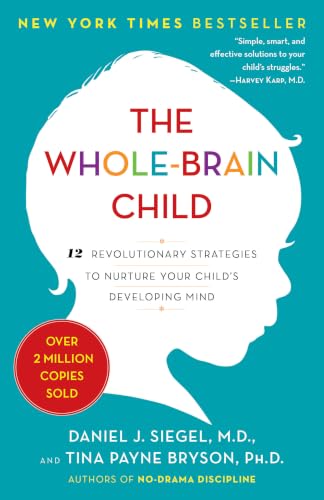
“The Whole-Brain Child: 12 Strategies to Nurture Your Child’s Mind” is an invaluable resource for parents and caregivers keen to understand the inner workings of their child’s brain. It simplifies complex brain science, revealing why your child reacts the way they do. With strategies like “name it to tame it” and “connect and redirect,” you’ll learn how to manage meltdowns while strengthening your bond. The book’s practical, relatable advice promotes not just your child’s emotional growth but also your own. Engaging writing and real-life examples make it a must-read for anyone involved in raising children, fostering deeper connections and understanding.
Best For: Parents, caregivers, and educators seeking to understand and nurture a child’s emotional and cognitive development.
Pros:
- Simplifies complex brain science into accessible strategies for everyday parenting.
- Promotes emotional growth for both children and parents, leading to calmer interactions.
- Includes real-life examples and age-specific suggestions, enhancing relatability and applicability.
Cons:
- Some readers may find the concepts repetitive if they are already familiar with child development theories.
- The strategies may require consistent practice and patience, which can be challenging for busy parents.
- Certain techniques might not work for every child, necessitating adaptation to individual needs.
How to Talk so Little Kids Will Listen: A Survival Guide to Life with Children Ages 2-7

Parents, grandparents, and educators looking for effective ways to communicate with children ages 2-7 will find “How to Talk so Little Kids Will Listen” an invaluable resource. This guide offers practical tools and relatable examples to tackle parenting challenges and reduce tantrums. You’ll discover strategies like writing shopping lists to prevent meltdowns and using exaggerated expressions to engage your child. Many readers report immediate success, boosting their confidence and enhancing their parenting skills. By acknowledging your child’s feelings and modeling problem-solving, you’ll foster their emotional growth and improve everyday interactions, making this book a must-read for anyone involved with young children.
Best For: Parents, grandparents, and educators seeking effective communication strategies for children aged 2-7.
Pros:
- Provides practical tools and relatable examples to address common parenting challenges.
- Empowers readers with techniques that boost confidence and enhance parenting skills.
- Encourages emotional growth in children by acknowledging their feelings and modeling problem-solving.
Cons:
- Some readers may find certain techniques challenging to implement consistently.
- The focus on young children may limit its applicability for older kids or different age groups.
- Not all strategies may resonate with every parent or child, leading to varied results.
Raising Good Humans: A Mindful Guide to Parenting

For those seeking a transformative approach to parenting, “Raising Good Humans: A Mindful Guide to Parenting” stands out as an invaluable resource. This book encourages personal reflection, helping you grow alongside your child. With practical strategies, it guides you in addressing parenting challenges, allowing you to manage your responses effectively. If you find yourself reacting rather than responding, this book offers tools to break that cycle. Readers rave about its insightful style and community feel, making it a recommended read for all parents. Many even gift it to friends, knowing it can spark positive change in their parenting journey.
Best For: Parents seeking a mindful and transformative approach to enhance their parenting skills while fostering personal growth.
Pros:
- Encourages personal reflection to help parents grow alongside their children.
- Provides practical strategies for managing parenting challenges and responses effectively.
- Fosters a sense of community through shared experiences and relatable insights from the authors.
Cons:
- May require a commitment to self-reflection that some parents find challenging.
- Some readers might feel overwhelmed by the emotional depth of the content.
- Practical strategies may not be suitable for every parenting style or situation.
How to Stop Losing Your Sh*t with Your Kids: A Practical Guide to Parenting

Struggling to keep your cool while steering through the chaos of parenting? “How to Stop Losing Your Sh*t with Your Kids” is the perfect choice for those who want practical strategies to manage their emotions without the weight of shame. This engaging book simplifies complex psychological concepts, making it accessible for every parent. You’ll find actionable advice to maintain composure, especially during stressful moments. The author’s relatable anecdotes resonate deeply, reminding you that you’re not alone in this journey. Whether you’re dealing with toddlers or teens, this guide equips you with the tools to nurture better relationships and foster mindfulness.
Best For: Parents looking for practical, shame-free strategies to manage their emotions and improve their relationships with their children.
Pros:
- Offers accessible and actionable advice based on psychological concepts.
- Engaging writing style with humor that resonates with readers.
- Personal anecdotes provide relatability and understanding of common parenting struggles.
Cons:
- Some readers find the advice repetitive or tiresome.
- The content may primarily appeal to women, potentially excluding male perspectives in parenting.
- Not all readers connect with the humor, with some finding it disrespectful.
The Montessori Toddler: A Parents Guide to Raising a Curious and Responsible Human Being

If you’re looking to cultivate a curious and responsible toddler, “The Montessori Toddler” by Simone Davies is an excellent choice. This guide provides practical tips for creating a child-friendly environment that nurtures independence. You’ll find insights into toddler behavior, helping you reflect on your own upbringing. Many parents notice immediate improvements in their child’s engagement after applying the advice. Though some critiques exist, particularly around sleep and screen time, the book encourages adaptability, making Montessori principles accessible to all families. It’s a valuable resource for fostering your toddler’s natural desire to learn and grow.
Best For: Parents looking to raise curious and responsible toddlers through practical Montessori principles.
Pros:
- Provides actionable tips for creating an independent, child-friendly environment.
- Encourages parental reflection on upbringing and understanding of toddler behavior.
- Offers adaptable suggestions that can fit various family dynamics and financial situations.
Cons:
- Some chapters may contain opinions that feel judgmental, particularly around sleep and screen time.
- Not all recommendations may suit every family’s unique circumstances.
- Ideal scenarios often involve high-quality toys and dedicated spaces, which may not be accessible to all families.
Good Inside: A Guide to Becoming the Parent You Want to Be

Parents seeking a compassionate and effective approach to understanding their toddlers will find “Good Inside: A Guide to Becoming the Parent You Want to Be” immensely valuable. Dr. Becky emphasizes that children are inherently good, and negative behaviors often signal unmet needs. Instead of reacting, you’ll learn to identify the underlying causes of behaviors like whining and tantrums. The book offers practical strategies for emotional regulation, helping both you and your child articulate feelings constructively. With its transformative insights, you’ll foster stronger emotional connections and navigate challenges while feeling equipped and supported in your parenting journey.
Best For: Parents seeking a compassionate and effective approach to understanding and connecting with their toddlers.
Pros:
- Empowers parents by providing practical strategies for navigating challenging behaviors and fostering emotional connections.
- Promotes emotional regulation by teaching both parents and children how to articulate and cope with feelings constructively.
- Transformative insights that extend beyond parenting, positively influencing adult relationships and personal growth.
Cons:
- Some readers may find the strategies require time and consistency to see significant results.
- The focus on emotional understanding may not resonate with every parenting style or cultural background.
- Additional resources, such as workshops or coaching, may incur extra costs for parents looking for further support.
No-Drama Discipline: The Whole-Brain Way to Nurture Your Child’s Developing Mind

For overwhelmed caregivers seeking effective strategies to nurture their toddler’s emotional development, “No-Drama Discipline: The Whole-Brain Way to Nurture Your Child’s Developing Mind” stands out as an essential resource. This book teaches you how to guide your child through emotional challenges without resorting to punishment. It offers practical applications and workshops, empowering you to reflect on your parenting style. Many parents report transformative changes in family dynamics after applying its principles. While some feel the role of punishment could be better articulated, the book remains a valuable tool for fostering understanding and healthier child-rearing practices.
Best For: Overwhelmed parents and caregivers seeking effective, non-punitive strategies for nurturing their child’s emotional development.
Pros:
- Provides practical applications and workshops that encourage reflection on parenting styles.
- Empowers parents to improve family dynamics and reduce chaos through understanding child development.
- Offers a thoughtful approach to discipline based on modern psychology and brain science.
Cons:
- Some readers feel the role of punishment in discipline is not adequately addressed.
- Minor criticisms include the quality of print and a desire for a larger, more user-friendly format.
- A few readers wish for a clearer articulation of a balanced approach to consequences.
What to Do When You Feel Like Hitting: A No Hitting Book for Toddlers

When toddlers struggle with emotions and exhibit aggressive behaviors, finding effective tools to help them express themselves can be challenging. “What to Do When You Feel Like Hitting: A No Hitting Book for Toddlers” stands out as an essential resource for caregivers seeking to guide young children through their feelings in a constructive way. With vibrant illustrations and simple strategies, this book encourages kids to calm themselves and discuss their emotions. Many parents report positive changes, including reduced hitting and increased empathy. While some find it repetitive, its core lessons benefit both toddlers and adults, making it a must-read for handling tricky emotions.
Best For: Caregivers and parents of toddlers looking for effective strategies to help young children manage their emotions and reduce aggressive behavior.
Pros:
- Beautiful, engaging illustrations that capture children’s attention.
- Provides simple, actionable strategies for emotional regulation that are easy for toddlers to understand.
- Encourages regular discussions about emotions, promoting empathy and understanding.
Cons:
- Some parents find the book repetitive and suggest it could be shortened for better engagement.
- Certain concepts may be too complex for some toddlers, requiring simpler language.
- While effective for some, not all children show significant improvement in behavior.
1-2-3 Magic: Gentle 3-Step Child & Toddler Discipline Guide

A standout feature of “1-2-3 Magic: Gentle 3-Step Child & Toddler Discipline Guide” is its tailored approach for parents managing the complexities of raising children with special needs, including ADHD and autism. This positive parenting guide offers simple, effective discipline strategies that promote calmness and consistency. You’ll appreciate how it encourages setting firm boundaries without resorting to yelling. Many parents have reported notable improvements in behavior after applying these techniques, finding them adaptable to their family dynamics. With its clear rationale, “1-2-3 Magic” is a valuable resource you can revisit to refine your parenting strategies.
Best For: Parents looking for effective and gentle discipline strategies, especially those with children who have special needs like ADHD and autism.
Pros:
- Encourages calmness and consistency in parenting, reducing the need for yelling.
- Offers simple, adaptable strategies that can be tailored to different family dynamics.
- Provides a clear rationale behind the techniques, enhancing understanding and effectiveness.
Cons:
- May require time and patience to see significant behavioral changes.
- Some techniques might need to be further adapted for unique family situations.
- Not all parents may resonate with the structured approach of counting.
Factors to Consider When Choosing Parenting Books for Toddlers
When choosing parenting books for toddlers, you need to take into account several key factors. Look for age-appropriate content that resonates with your child’s developmental stage, and guarantee the strategies offered are practical and easy to implement. Also, check the author’s expertise and writing style to find a book that clearly communicates valuable insights on emotional development.
Age Appropriateness of Content
Selecting the right parenting books for toddlers is vital, as the content must align with their unique developmental stages. Focus on books specifically tailored to children aged 1 to 3 years, since their needs differ markedly from older kids. Look for resources that provide age-appropriate strategies, considering toddlers’ limited emotional regulation and communication skills. Books should emphasize techniques that resonate with their understanding. Practical advice and real-life examples can enhance engagement, making daily parenting scenarios more manageable. Prioritize titles that include research-backed insights into toddler behavior, ensuring the advice aligns with current psychological practices. Finally, evaluate the language used; straightforward guidance is important, as overly complex terminology can alienate parents seeking clear direction for their young children.
Practical Application Strategies
Finding the right parenting books for toddlers goes beyond just age-appropriate content; it also involves practical application strategies that fit seamlessly into your daily life. Look for books that offer actionable techniques you can easily implement, enhancing your child’s learning and development. Resources with real-life examples help you understand how to apply concepts in practical situations. Choose books that emphasize emotional regulation and communication strategies, enabling you to manage your responses and build better relationships with your child. Visual aids, summaries, or checklists can boost comprehension and retention of key ideas for both you and your little one. Finally, select guides that encourage reflective practices, allowing you to assess and improve your parenting techniques over time.
Author’s Expertise and Credentials
Choosing the right parenting book for toddlers involves considering the author’s expertise and credentials. Look for qualifications like degrees in psychology, child development, or education; these credentials lend credibility and guarantee the advice is grounded in research. Authors with real-life parenting experience often provide relatable insights into the everyday challenges you face. Check if they’ve published in reputable journals, as this shows a commitment to ongoing education in the field. Endorsements from child psychology or education experts can further validate their effectiveness. Finally, make certain the author’s approach—whether evidence-based or anecdotal—aligns with your values and beliefs about parenting, assuring their guidance resonates with you and is practical for your family.
Writing Style and Clarity
When it comes to parenting books for toddlers, a clear and engaging writing style is essential for understanding and applying the concepts. You’ll want to choose books that avoid complex jargon, using relatable language to keep things accessible, especially if you’re a first-time parent feeling overwhelmed. Look for authors who include real-life examples and practical strategies—they’ll help you see how to implement advice in your own home. A user-friendly layout with organized sections and a thorough index makes it easier to reference solutions during parenting challenges. Additionally, books that incorporate humor and storytelling create a more enjoyable reading experience, helping you feel less isolated and more connected to the content.
Focus on Emotional Development
A solid understanding of emotional development can make a significant difference in your parenting journey with toddlers. Books that focus on this area help you guide your child in identifying, understanding, and managing their emotions. This can lead to better behavior and smoother social interactions. By recognizing emotional cues, you can reduce tantrums and meltdowns, creating a more peaceful home environment. Look for resources that emphasize modeling emotional regulation and offer relatable examples. These approaches teach your toddler how to express their feelings constructively. Engaging with books centered on emotional development empowers you to cultivate empathy and resilience, which support your child’s overall mental health and well-being. Choose wisely to foster a strong emotional foundation for your little one.
Inclusivity and Accessibility of Ideas
Selecting parenting books that prioritize inclusivity and accessibility can greatly enhance your understanding and practice of toddler parenting. Look for books that adapt to various family dynamics, allowing you to tailor approaches to fit your unique situation. It’s essential that the content acknowledges diverse parenting styles and cultural backgrounds, ensuring the advice resonates widely. Choose resources that use supportive language and avoid judgmental tones, creating a welcoming environment for all parents. Practical applications and actionable strategies make it easier for you to implement concepts in daily life. Finally, assess the accessibility of ideas; simple, relatable language helps caregivers of different educational levels and experiences engage with the material effectively.